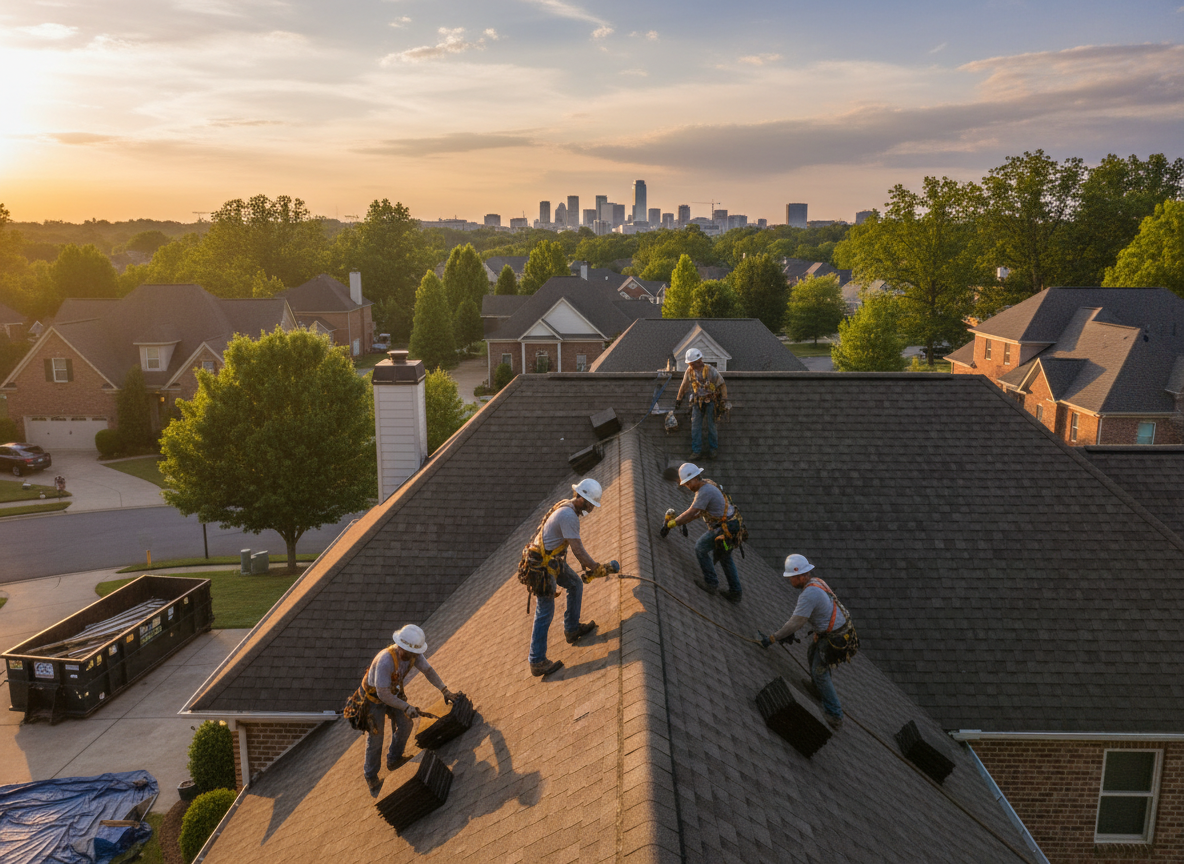
Installing a roof on a home; whether replacing an old system or putting a roof on new construction; is a different scope than repairing leaks, and it calls for a contractor who handles the full installation process. Roof installation company charlotte work covers new roof installation from deck preparation and underlayment through shingle application, flashing, and final inspection, performed to Mecklenburg County code. At roof replacement charlotte, we support Charlotte homeowners and builders who need a roof installed correctly the first time, with the right materials for the Piedmont climate and the permits the county requires. If you are searching for a roof installation company charlotte residents and builders use, this page explains what new roof installation includes, how code and permits shape the job, and what to expect from start to finish.
What does new Charlotte roof installation include?
Charlotte homeowners and builders hiring a roof installation company charlotte team are undertaking a full system installation, not a spot repair. That means preparing or replacing the roof deck, installing underlayment and ice-and-water shield, applying shingles or another approved covering, flashing all penetrations, and completing the work to pass a Mecklenburg County Code Enforcement inspection. The Piedmont climate shapes every decision: severe thunderstorms and hail strike regularly, NOAA records show hundreds of wind events in Mecklenburg County, and most local residential roofs are architectural asphalt shingles installed on homes 15 to 25 years old that last roughly 18 to 22 years in the local heat and humidity. A new roof installed to code with the right fasteners, underlayment, and wind-rated materials protects the structure for decades; one installed without attention to local conditions fails long before it should.
Why choose a Charlotte roof installation contractor?
Pages describing a roof installation company charlotte option often present installation as a commodity; shingles on a deck; without addressing what determines whether the roof survives here: hail, thunderstorm wind, the North Carolina residential code wind provisions, and Mecklenburg County's permit and inspection process. Charlotte sits in a wind zone where code governs design wind speeds, fastener schedules, underlayment, and anchorage, and a contractor who installs without referencing these requirements is not installing for this climate. Most homes in the area carry architectural asphalt shingles, and the housing stock's age means replacement and new installation demand concentrates in storm season, which affects scheduling and pricing. We approach roof installation company charlotte work with local specificity: code-compliant fastening and underlayment for the wind zone, impact-rated shingle options suited to documented hail activity, the county permit process, and an honest discussion of material choices versus cost rather than a one-size-fits-all pitch.
Why you shouldn't delay new Charlotte roof installation?
Delaying a needed roof installation; whether on an older home with a failing system or on new construction awaiting a roof; exposes the structure to Mecklenburg County's next storm. Water that enters through an incomplete or aging roof travels along rafters and insulation before a ceiling stain appears, damaging decking, insulation, and electrical components, and each thunderstorm or hail event widens the problem. The local storm season means an unprotected or failing roof faces significant wind and rain within weeks, not months, and emergency tarping costs more than scheduled installation. Most asphalt roofs in Charlotte last 18 to 22 years, shorter than national quotes suggest, because heat, humidity, and storm exposure accelerate aging. Scheduling the installation now protects the structure, locks in materials before storm-season demand peaks, and avoids the premium pricing and interior repairs that follow water intrusion.
What local code applies to Charlotte roof installation?
Verifiable local facts shape a roof installation company charlotte conversation. Mecklenburg County Code Enforcement requires building permits for new roof installations and full replacements, and any work involving structural repairs or decking; permits typically run about $100 to $300 with a turnaround of roughly one to three days. North Carolina residential code provisions place Charlotte in a wind zone where design wind speeds govern fastener schedules, underlayment type, and anchorage from roof to foundation; requirements that apply to new installation as much as to replacement. NOAA storm-event data documents frequent hail and thunderstorm wind activity in Mecklenburg County, which is why impact-rated shingles and proper flashing details matter here. These are public facts from the county permit page, the state building code, and the NOAA storm events database, and any roof installation company charlotte homeowners hire should be able to reference them.
How does new roof installation integrate with an existing Charlotte roof?
A situation most roof installation company charlotte pages never address is new construction or addition roofing on a home where the roof must integrate with an existing system, match the current shingle generation, and meet current code; not the code in effect when the original roof was installed. In Charlotte, adding a roof to an addition, a garage, or a new home means tying into existing flashing, maintaining proper drainage planes, and installing to today's wind-zone fastener and underlayment standards, which may exceed what the older roof on the same property was built to. Generic installation pages discuss shingle selection and labor; they do not explain how a Charlotte installation integrates with an existing roof, what code upgrades the county may require when the deck is exposed, or how to sequence the installation so the interior stays dry during Mecklenburg County's storm season. That integration-aware, code-current installation is the value a local company provides.
Roof deck preparation and sheathing
Roof deck preparation is the foundation of any new installation: the plywood or OSB sheathing must be sound, dry, and properly fastened before any covering goes on. On a Charlotte roof installation, the deck is inspected for rot, water stains, and soft spots, and damaged sheets are replaced before underlayment and shingles are installed. What goes wrong: installing over rotted or uneven sheathing, which telegraphs through the new shingles, holds moisture, and shortens the system's life. What the homeowner should do or ask: require a deck inspection before installation, get written pricing for sheathing replacement per sheet, and confirm the deck is clean, dry, and structurally sound before materials are delivered.
Underlayment and moisture barrier
Underlayment is the secondary water barrier installed over the deck and beneath the shingles, with ice-and-water shield at eaves, valleys, and penetrations where water concentrates. In the Piedmont climate, wind-driven rain from thunderstorms can drive moisture under shingles, and the underlayment is what keeps the deck dry when the outer layer fails. What goes wrong: skipping underlayment at rakes and eaves, using felt that tears during installation, or leaving valleys unlined. What the homeowner should do or ask: confirm synthetic underlayment covers the full deck, that ice-and-water shield extends the code-required distance from eaves and through valleys, and that the materials are rated for the local wind zone.
Shingle application and fastening
Shingle application and fastening determine whether a new roof survives Charlotte's thunderstorms. Architectural asphalt shingles are the most common local choice, applied in overlapping courses with fasteners driven through the nailing zone; the correct fastener count, type, and placement depend on the local wind-zone code. What goes wrong: overdriven or underdriven nails, the wrong fastener for the deck material, or a four-nail pattern where the wind zone requires six. What the homeowner should do or ask: confirm the shingle is architectural or impact-rated as needed, that the fastener pattern meets Mecklenburg County wind-zone requirements, and that fasteners are driven flush and straight per the manufacturer and code.
Flashing, valleys, and roof transitions
Flashing, valleys, and transitions are the leak points of any roof, and on a new installation every penetration and intersection is flashed and sealed from the start. Chimneys, skylights, plumbing vents, roof-to-wall transitions, and valleys all require step flashing, counterflashing, and sealed valley liners. What goes wrong: reusing old flashing on a tear-off, improper lap sequencing, or sealant that cracks in the local heat cycle. What the homeowner should do or ask: confirm all new flashing is installed, valleys are lined, and the flashing work carries a warranty that matches or exceeds the shingle system.
Mecklenburg County permit, code, and inspection
Mecklenburg County Code Enforcement governs new roof installation permits and inspections. A building permit is required for new installations and full replacements, fees typically run about $100 to $300, and issuance takes roughly one to three days. North Carolina residential code provisions set the design wind speed for this zone and dictate fastener schedules, underlayment, and anchorage. What the homeowner should do or ask: request the permit number before work starts, confirm the contractor schedules the county inspection, and verify the finished roof passes final approval before the job is considered complete.
Technician insight
New installation starts with a bare deck so every layer—underlayment, flashing, fasteners, shingles—can be specified for the Piedmont climate from day one rather than inherited from a previous installation, avoiding costly retrofits later.